

Part one of two
A few years into my career, I started noticing people in other departments moving up faster than I was. Not because they worked harder. They were just more visible. Better connected. In rooms I never seemed to be in. I was heads down on a team stretched too thin to notice, doing exactly what I’d been taught to do, waiting for it to be my turn. It kept not being my turn. I told myself it was timing, and put my head down again.
If hard work and competence were really the solution, they would have worked cleanly. They didn’t.
I’d been raised by school, by my parents, by every adult I respected, by the entire structure of the early job market, on one simple equation:
Work hard. Be reliable. The rest takes care of itself.
“The rest takes care of itself” is a beautiful lie.
Not entirely false. True enough to keep you running the equation long after it’s stopped paying out. It’s a quiet permission to keep your head down, doing the thing you were told would be enough. Patience, they said.
For a long time it did seem to. Through school, through my first job, through my first promotion. I kept showing up, taking on the harder thing, getting the work right. The equation held. Things took care of themselves.
Then somewhere in my late twenties, things stopped taking care of themselves.
The people getting promoted weren’t always the people doing the best work. The people getting the interesting projects weren’t always the most competent ones. The people whose names came up in rooms I wasn’t in were sometimes people whose work I quietly thought wasn’t very strong. My equation, the one that had been quietly running my entire working life, started returning unexpected results.
What confused me most wasn’t the unexpected results. It was that I couldn’t see the equation. I’d been running it for so long I’d forgotten it was a belief. It had become “how things are.”
When you’re an infant, everything is a test. You touch the hot pan once. You learn not to touch it again. You taste the sweet fruit, you crave it again. Every input gets weighed and filed into memory.
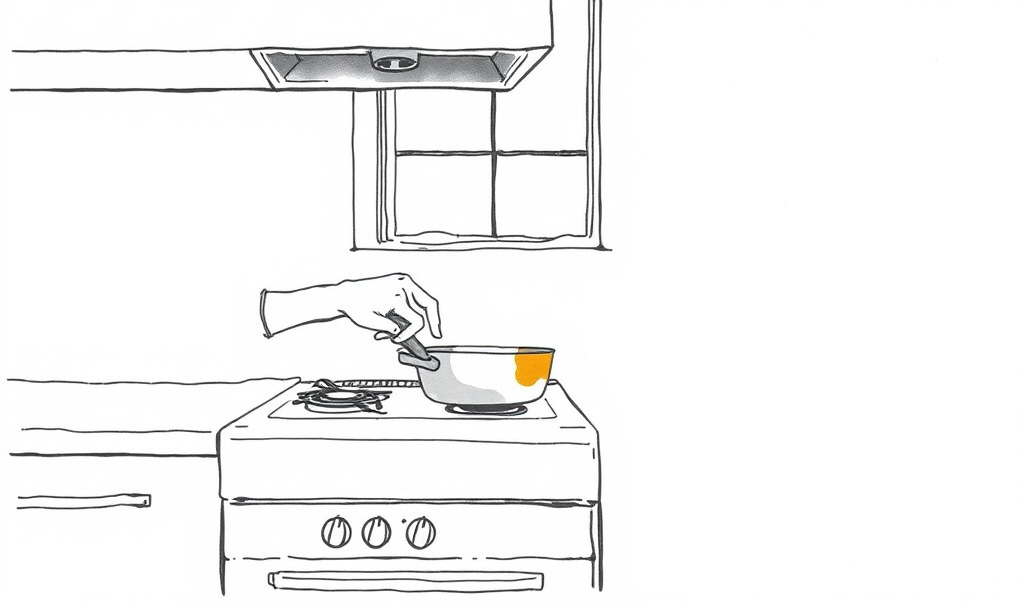
You can’t run that forever. Testing everything is exhausting. So your brain does the sensible thing: once something has worked enough times, it stops asking. It files the lesson as fact, and from then on you just act. On autopilot. Neuroscientists call it automaticity: once a response is reliable enough, the brain stops working it out fresh each time and just runs the saved one. The system runs in the background.
It’s about efficiency, and not getting burned twice.
Without it, you’d burn out by 9am re-testing the same things.
The trouble is, autopilot doesn’t know when conditions change. The lesson installed at six, or sixteen, or twenty-two, stays running long after the situation that taught it. The hot pan you remember was in your mother’s kitchen in 1995. The pan in front of you isn’t the same pan. But your hand still pulls back.
Most of adult life is run on these old, installed lessons. They worked, so they became facts.
I got hurt so I must protect myself.
Nobody told you to go back and check whether the conditions they were learned under are still the conditions you’re in.
By your thirties, you’re running quite a few of these. Secondary school installed some. An elite university installed more. Your first job at a bank or a consulting firm or a tech company finished the job. The lessons got installed because they paid out, reliably, for years.
The system that installed them was the same system that rewarded them. So you trusted both.
Then, slowly, the conditions change. Not the room you’re in. The room around the room. You’re older, the people you’re competing with are older, the rules of the game have quietly moved. The lesson is still running, the same lesson it always was. But the pan in front of you isn’t the same pan. And your hand is still pulling back.
Three of mine. I stopped believing them in my mid-thirties. The habits they built are still in my hands.
“Work hard and you’ll be recognised.”
True at twenty-two. By thirty-five, the people getting recognised aren’t the ones working the hardest. They’re the ones with the right visibility and the right relationships. The work still matters. It’s the price of entry, not what sets you apart. But the lesson in your head still tells you that if you just put your head down and do a little more, it’ll come. So you do. And it doesn’t. You watch someone whose work you outclass get moved up, and instead of doubting the lesson, you decide you mustn’t have worked hard enough. So you put your head down further. And it still doesn’t come.
The lesson isn’t wrong. It’s outdated. It was true for a season, and that season ended without anyone telling you.
“Asking for help is weakness.”
This one got installed deep, probably in school, probably reinforced by every system that rewarded you for being the one who figured it out alone. By the time you’re senior, the lesson is so naturalised it doesn’t feel like a lesson. It feels like dignity. So you don’t ask. You spend three weeks stuck on something, telling yourself you’ll crack it, until you mention it in passing and someone two desks down says, “oh, I sorted that out last year. Give me five minutes.” You say thanks. What you actually feel is the three weeks you’re not getting back. The cost is silent. You don’t see what asking would have saved you, because you didn’t ask.
“The work should speak for itself.”
A cousin of the first, with a sharper edge. The unspoken second half is: and I don’t need to do anything embarrassing like advocate for myself. This one is partly a belief and partly a posture. It lets you keep your head down and feel a little above the people doing the politics. Quietly, it’s the most flattering of all the lies — you get to be both diligent and morally superior.
But the people doing the politics are also competent. They just understood earlier that competence is one input, not the whole input. So your work gets attributed to someone else, or stays invisible, or gets filed under “reliable,” which in a lot of places means “we trust you to keep doing the hard thing without ever having to promote you.” You sit in the meeting where someone walks through the thing you built, and you say nothing, because speaking up would feel like begging. So the credit stays theirs. And you stay reliable.
None of these are running me the way they used to. I stopped believing them years ago. But the reflex outlasts the belief. I still catch myself working harder when the data says working harder isn’t the thing. I still catch myself waiting to be noticed instead of asking to be.
Knowing isn’t the same as updating. The habit takes much longer than the lesson does.
Updating is slower than I thought it would be.
What helped was smaller than I expected. Taking one lesson off autopilot for a minute and actually looking at it.
Asking myself: When was this installed in me, and are those conditions still around. That’s most of the audit.
Most of what’s running is fine. Most of what got installed served you well, and continues to. You don’t need to rewrite the whole system. You just need to find the two or three lessons that have gone stale and are now quietly costing you. That work is slower and stranger than it sounds. That’s what part two is about.
For now, you can probably feel which one it is. The one you’ve been defending without anyone attacking it. The one you’re already arguing with, quietly, as you read this.
That’s the one.
Part two is coming in 2 weeks: what it actually takes to update one of these without breaking the parts that still work. Subscribe and you’ll get it when it lands.
Nate Ong writes Honest to Greatness from Singapore - essays on the decisions that loop, the systems that shape them, and what they’re trying to tell you before you force an answer.
He also coaches, mostly senior people in tech working through questions they’ve been carrying for a while. ICF trained.
More at nateong.com, including the free 7-Day Honest Check-In (one question a day, by email) or a way to book a conversation.